


Steel Buildings » Aircraft Hangars
AIRCRAFT HANGARS
Steel Aircraft Hangars in Wyoming, Utah & Idaho
Brooks Steel Buildings supplies custom pre-engineered steel aircraft hangars for private and corporate aircraft. Wide clear spans give you open floor for wings and tails, door openings are designed for your hangar door, and every building is engineered for your site’s snow and wind loads.
30+
Years in the steel building industry
8–10 Weeks
Current turnaround
Engineered
For your site’s snow and wind loads
WY · UT · ID
Where we supply buildings
Hangars Designed Around Your Aircraft
A hangar starts with the aircraft: wingspan, tail height, and how you move it in and out. We design the clear span, eave height, and door opening around those dimensions, then engineer the building for your site. Explore dimensions, rooflines, colors, and openings in our 3D designer before you call. Planning a shop, warehouse, or other building at your airport? See our Industrial and Warehouse and Shops and Garages pages.
What Are You Building?
The most common hangars we supply.
Private Hangars
Space for a personal aircraft, with room for a workbench, tools, and storage.
Corporate Hangars
Larger hangars for business aircraft, with room to expand as your needs grow.
Box Hangars
Open, clear-span hangars for one or more aircraft, planned around your door and floor.
Hangar with Shop or Storage
Space beside or behind the aircraft bay for maintenance, parts, and equipment.
Steel Aircraft Hangars
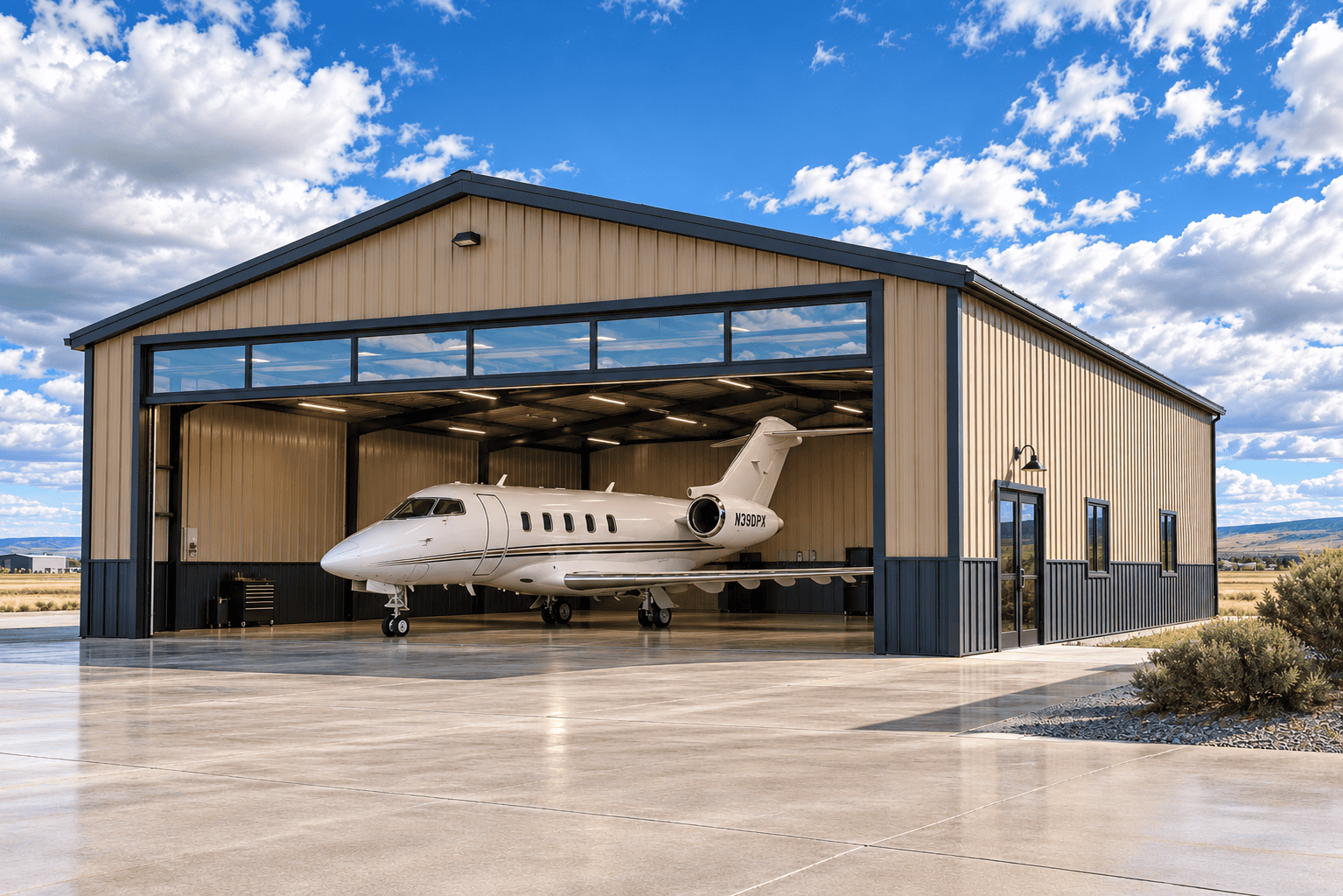
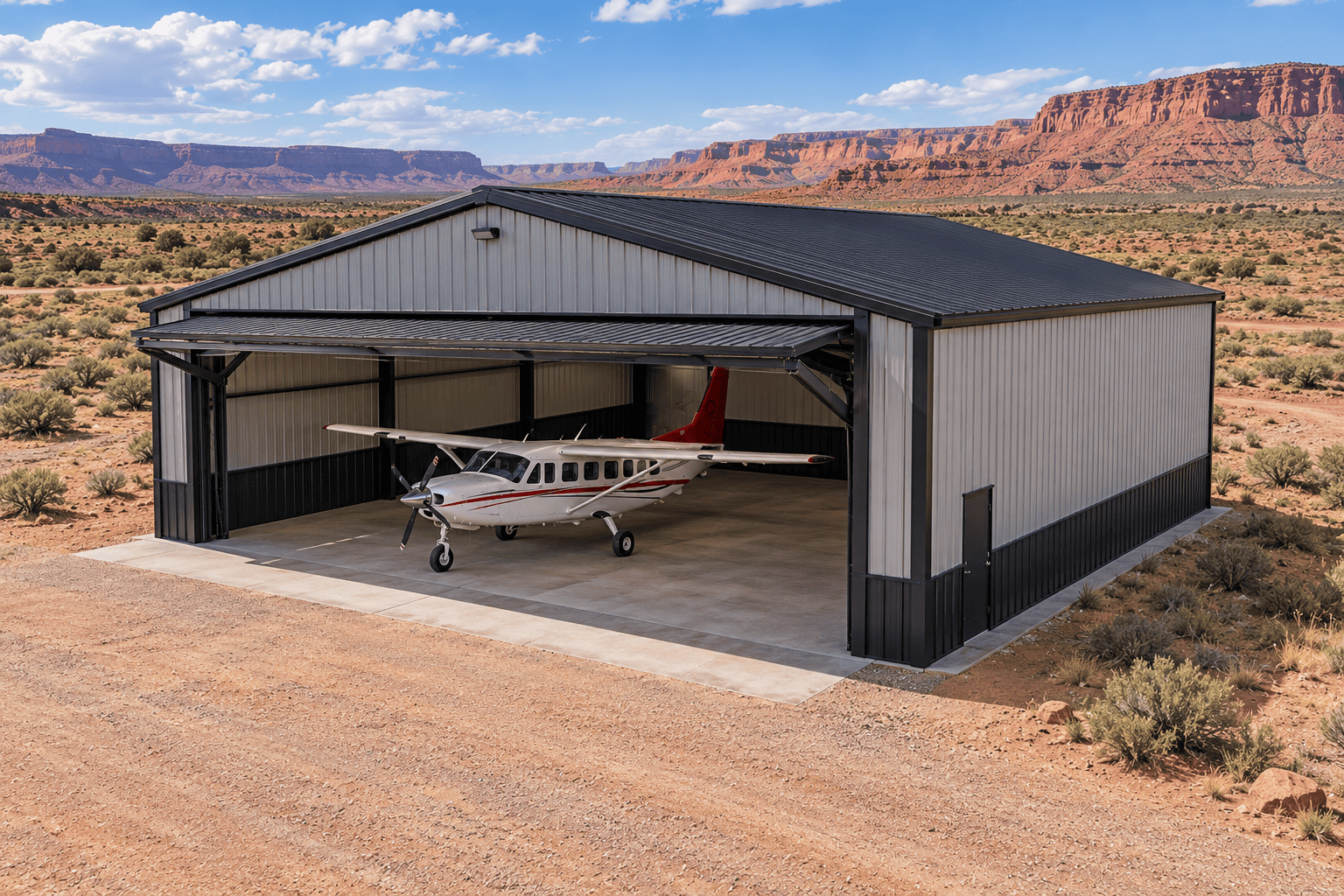
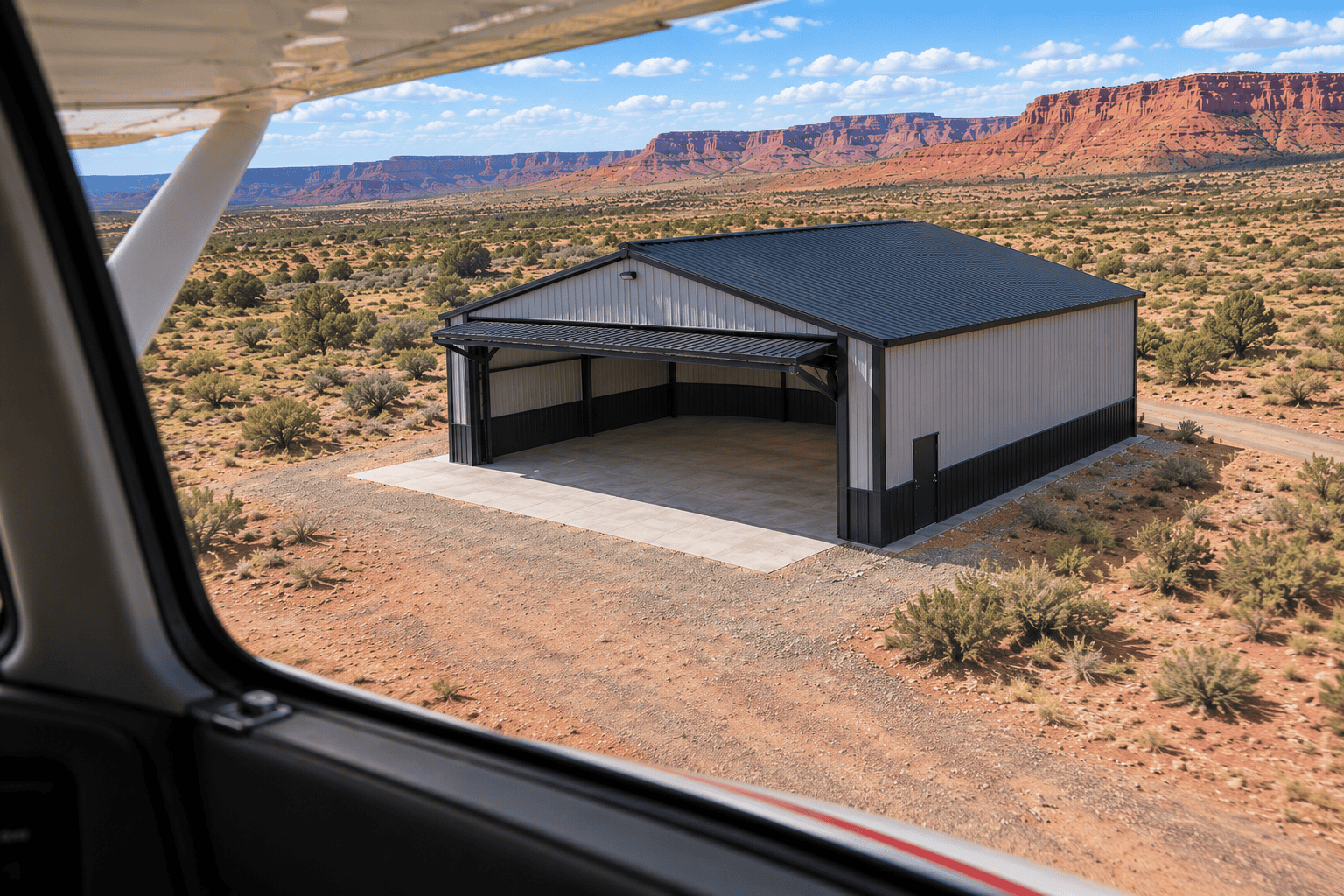
Concept renderings of steel aircraft hangars.
Hangar Features and Options
Every hangar is designed around your aircraft, your door, and your airport.
Clear-Span Interior
No interior columns, so aircraft can be moved in and out and parked without obstruction.
Tall Eave Heights
Height planned for tail clearance and the door you choose.
Large Door Openings
Wide, tall openings designed for bi-fold, hydraulic, and sliding hangar doors. Doors are installed by others.
Insulation Available
We supply insulation. Tell us how you will use the hangar and we will include the right options in your quote.
Room to Expand
Plan for future bays or lean-tos from the start, or add them later.
Canopies and Overhangs
Covered areas over entrances and work areas.
Hangar size, setbacks, height limits, and fire requirements vary by airport and local code. Check with your airport authority and building department early, and share your wingspan, tail height, and door plans with us so we can design to them.
Plan Your Hangar
Four decisions shape most hangars.
Know Your Aircraft
Wingspan, length, and tail height, now and for any aircraft you may add later.
Choose the Door Type
Bi-fold, hydraulic, or sliding, so the opening and framing are designed correctly.
Set the Size
Width, depth, and eave height to fit your aircraft, tools, and storage.
Confirm Airport Rules
Airport authority and building department requirements for your site.
Not sure what size you need? Tell us your aircraft and we will help you plan it.
How Your Project Works
A simple process from first call to finished building.
1. DesignWe talk through your needs, site, and budget and plan the right building.
2. EngineeringYour building is engineered for local codes, with plans prepared for permitting.
3. PreparationYour building package is prepared for accurate, efficient assembly.
4. DeliveryYour building package is delivered to your job site.
5. ConstructionBuild it yourself or hire a contractor.
Design It in 3D
Explore sizes, styles, colors, and options with our interactive 3D building designer.
Aircraft Hangar Questions
What size hangar do I need?
Start with your aircraft’s wingspan, length, and tail height, then add room to move the aircraft in and out and to work around it. Tell us your aircraft and we will help you choose a width, depth, and eave height.
What types of hangar doors can the building be designed for?
We design the door opening for bi-fold, hydraulic, and sliding hangar doors. Tell us the door type and size you plan to use so the framing and clearances are designed correctly.
Do you supply hangar doors?
No. We design and frame the building for your hangar door, and the door is installed by others. Tell us the door type and opening size early so the design accounts for it.
Can you design a hangar with a wide clear span?
Yes. Clear-span steel buildings can be designed with wide, open floors and no interior columns. The practical size depends on your loads, site, and design. Tell us the size you need and we will plan the building around it.
Can the hangar be insulated?
Yes. We supply insulation. Tell us how you will use the hangar and we will include the right options in your quote.
Do I need airport or FAA approval for a hangar?
Requirements vary by airport and by county or city. Check with your airport authority and local building department before you order. Your building is engineered for local codes, with plans prepared for permitting.
Can I add on to the hangar later?
Yes. Steel buildings can often be designed so bays or lean-tos can be added later. Let us know your plans so the design allows for it.
How long does it take to get a hangar?
Our current turnaround is 8 to 10 weeks. Timelines can vary with project size, options, and demand.
Get Your Free Quote
Tell us about your project and we will provide a custom quote based on your needs.
Prefer to talk? Call 800-908-4839.
By submitting this form, you agree to our Privacy Policy.